


In Bimbia, where the popular slave trade village is situated in the town of Limbe, farms now press against fragments of forest that once stretched deeper into the landscape, Pauline Sakwe— known in her community simply as Mama Pauline, says the mornings are no longer what they used to be.
“We used to hear birds all the time, especially in the early hours,” she said, standing near the edge of her farm. “Now it is not the same. The forest is going, and the sounds are going with it.”
Across Limbe and surrounding communities, that silence is becoming a warning sign.
According to research, conservationists, wildlife workers and environmental researchers say deforestation is steadily eroding one of Cameroon’s richest ecological zones — a landscape where rainforest, mangroves, volcanic slopes and coastal wetlands support wildlife, farming and fishing livelihoods at the same time. As forest cover thins around Bimbia, Bonadikombo, Bakingili, and other parts of Limbe, the effects are no longer confined to the bush. They are being felt in farms, along the coast, and in the growing strain between people and wildlife.
The damage is unfolding on at least three fronts at once: “wild animals are losing habitat, birds are losing nesting and feeding grounds, and the volcanic soil that sustains farming in Fako Division is becoming more exposed to erosion” said Awah Mayson, a Limbe based graduate from the Regional College of Agriculture Bambili.
A forest under pressure
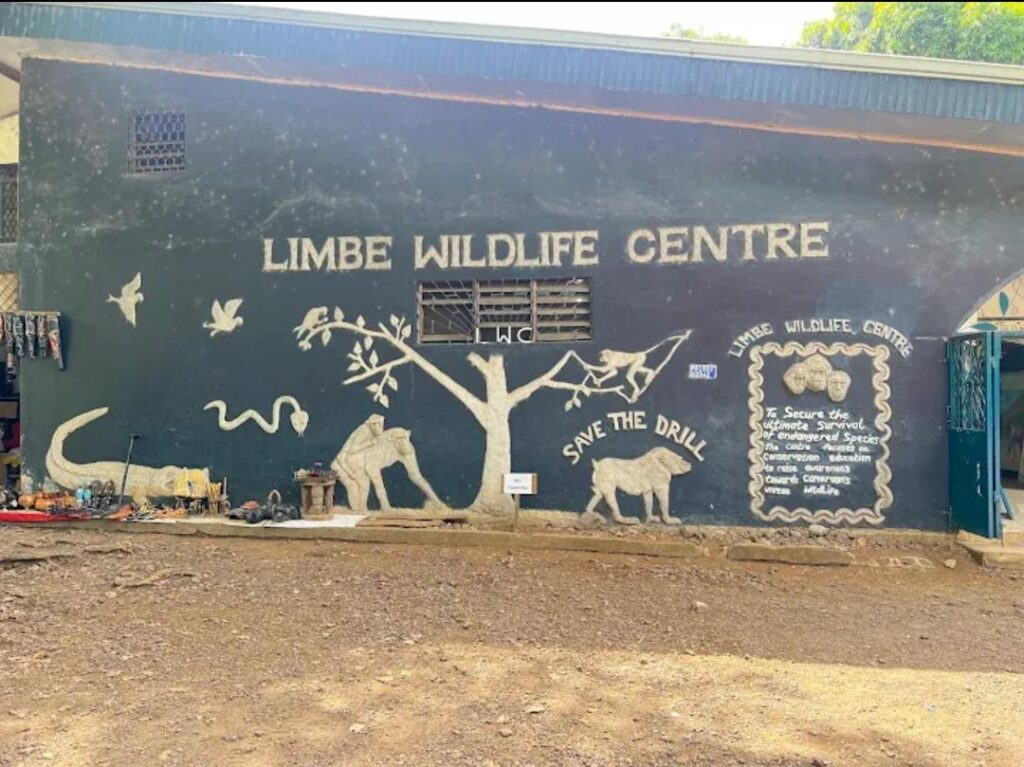
Limbe sits within the wider forest belt of southwest Cameroon, part of the Guineo-Congolian rainforest system and the Cross-Sanaga region, an area recognized for exceptional biodiversity. The Limbe Wildlife Centre, which rescues and rehabilitates animals seized from poaching and the illegal wildlife trade, says the wider region is home to some of the country’s most threatened species, including chimpanzees, putty-nosed monkeys and African grey parrots.
But the forests these animals depend on are under mounting pressure from small-scale farming, fuelwood harvesting, timber extraction, settlement expansion, and the steady spread of human activity into previously wooded areas. Along the coast, mangroves are also being cut for domestic fuel and fish smoking, a long-documented source of pressure on southwest Cameroon’s mangrove ecosystems.
For residents, the changes can appear gradual at first — a cleared patch here, a new farm there, fewer large trees, fewer birds, a hotter stretch of land. But for species that depend on continuous forest cover, those scattered cuts can amount to a major ecological rupture.
Primates lose the forest corridors they need
At the Limbe Wildlife Centre, staff working with rescued primates, Stanley says one of the most damaging consequences of deforestation is habitat fragmentation — the breaking up of once-connected forest into isolated patches.
Primates such as drills, chimpanzees, and several monkey species depend on intact or connected forest to move, forage, avoid predators, and maintain breeding populations. Once the canopy is cut into fragments, movement becomes harder, and groups can become separated from one another.
“When forests are split into smaller patches, animals lose the routes they use to move safely,” Sakwe John, a conservation worker familiar with primate rehabilitation in Limbe, said. “That means less access to food, separation amongst a particular species, and a greater chance of coming in contact with people.”
The Limbe Wildlife Centre cares for several of the species most affected by habitat destruction and wildlife trafficking, including chimpanzees, mona monkeys, and putty-nosed monkeys Its conservation material notes that the Cross-Sanaga region, where Limbe is located, is one of the most biologically important yet threatened forest systems in the country.
As habitat shrinks, wildlife is also more likely to live in farmlands and even roadside settlements as they search for food or passage.
Conservationists based on research say that when forest edges retreat, the line between wildlife habitat and human space becomes harder to maintain, increasing the possibility of crop damage, animal injury, or retaliatory killing.
Birds lose nesting trees and feeding grounds
If the disappearance of mammals is not always immediately visible, the decline in birdlife is often heard first.
In forest communities around Limbe, older residents and farmers increasingly describe a reduction in the calls of species once common in wooded areas.
“There are days I come to the farm without my watch or cell phone, especially during the raining season. So my means of knowing what says the time is through the clock bird as we call it. But I can’t remember when last I heard the clock bird, ” Madam Marie explained.
Bird species that rely on old, tall trees for nesting are especially vulnerable. African grey parrots, one of the region’s most iconic and threatened birds, depend on forest habitat and nest in tree cavities, often in large mature trees.
Loss of habitat, alongside trapping to be sold as pets, has brought about a major decline in their numbers across Central and West Africa.
The connection between forest loss and bird decline is straightforward: when large trees disappear, birds lose nesting sites, shelter, and feeding grounds. Species that depend on dense forest can quickly give way to more adaptable birds that tolerate open and disturbed landscapes.
Along the coast, the pressure extends to mangrove habitats as well.
Research in southwest Cameroon has shown that mangrove wood extraction for fish smoking and fuel has placed severe pressure on mangrove ecosystems, which serve as breeding and nursery grounds for fish and other aquatic life.
These same mangroves also provide habitat for bird species and help stabilize fragile coastal environments.
What can still be saved
Despite the pressure, conservationists say the situation is not beyond repair — but it will require acting before the remaining forest fragments become too degraded to recover.
In and around Limbe, responses are already taking shape, though unevenly. Reforestation campaigns, mangrove restoration efforts, and agroforestry projects that encourage farmers to plant and retain shade trees are increasingly being promoted as practical ways to protect both livelihoods and biodiversity.
NGOs involved in environmental works such as CAMCOF- Cameroon Mountains Conservation Foundation and others carry out the operation 1 tree campaign where they encourage and teach locals how to plant trees.
Wildlife education campaigns also continue to stress that saving threatened species can not be separated from saving habitat.
For communities, that message is becoming harder to ignore.
A forest is not only a place where animals live. In Limbe, it is part of what keeps farms productive, fish breeding grounds functioning, and local temperatures bearable. It stores water, shields fragile soils, and gives threatened wildlife somewhere to survive outside their cages
Back in Bimbia, another local Mr. Mofor Aaron, on his way to his farm, said the concern is no longer abstract. He sees it in the heat on cleared land, in the shades that have been reduced, and in the thinning line of trees that once stood beyond his farm.
“If the forest finishes,” he said quietly, “everybody will feel it.”
That may be the clearest warning of all. In Limbe, deforestation is no longer only about trees falling in distant forest patches. It is about what disappears with them — the birds, the wildlife, the soil, and the fragile environmental balance on which entire communities depend.