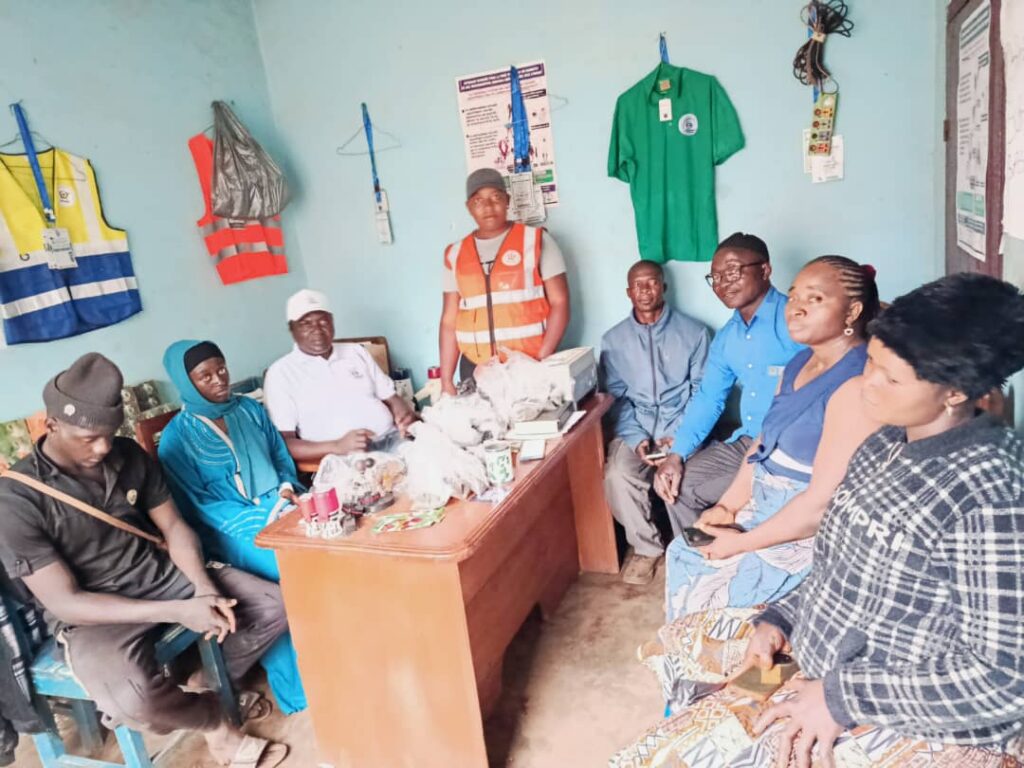
HIACA team and some CIG members during the seed sharing activity in Nkambe
In Cameroon’s conflict-affected North West Region, where many communities continue to grapple with economic hardship and limited access to basic services, a local humanitarian organization is working quietly to bridge immediate relief with long-term empowerment.
Founded in October 2024 and officially legalized in January 2026, Hearts in Action Cameroon (HIACA) operates from its head office in Nkambe, with activities spanning several towns including Bamenda, Belo, Fundong, and Douala.
According to its President and Founder, Francis, the organization was created to respond to both urgent humanitarian needs and the structural challenges facing vulnerable populations.
“HIACA was founded to bridge grassroots initiatives with global humanitarian principles,” Francis said. “We are addressing social, economic, agricultural, and environmental challenges affecting vulnerable communities.”
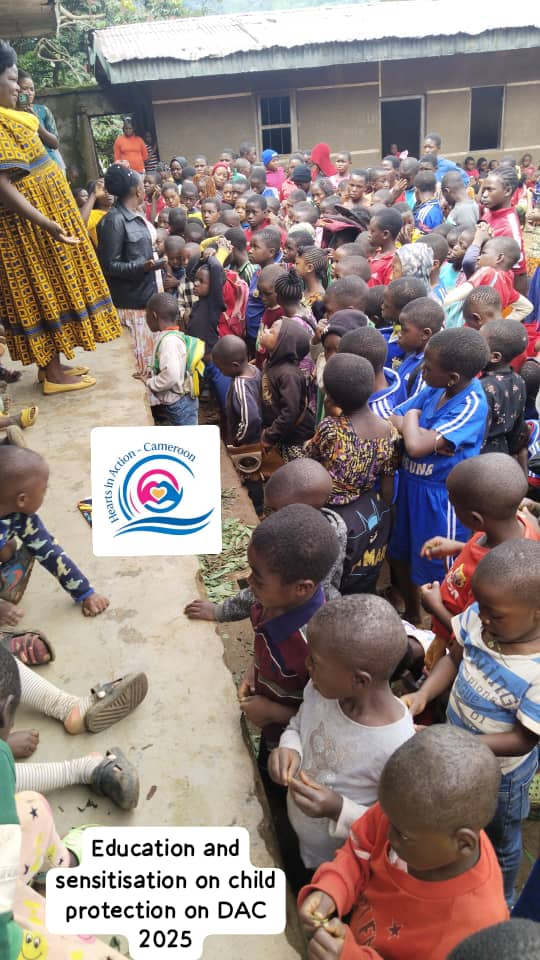
Accounding to the founder, the HIACA since creation, has carried out a range of relief activities targeting some of the most vulnerable groups. The organization has donated food items and clothing, paid hospital bills for children in need, and visited orphanages in Bamenda, providing essential supplies.
In the aftermath of the Nkambe bomb blast, HIACA also distributed bottled water, soap, and hygiene materials to affected populations, an intervention aimed at addressing urgent needs in a time of crisis.
Clothing donations have reached communities across Nkambe, Belo, Bamenda I, II, and III, as well as Santa, Fundong, Ako, Dumbo, Sabongari, and Douala IV, reflecting the organization’s expanding geographic footprint.
While humanitarian assistance remains a core part of its work, HIACA is increasingly focusing on sustainable solutions particularly in agriculture.
“We don’t just want to give support temporarily,” Francis said. “We want to empower people to sustain themselves.”
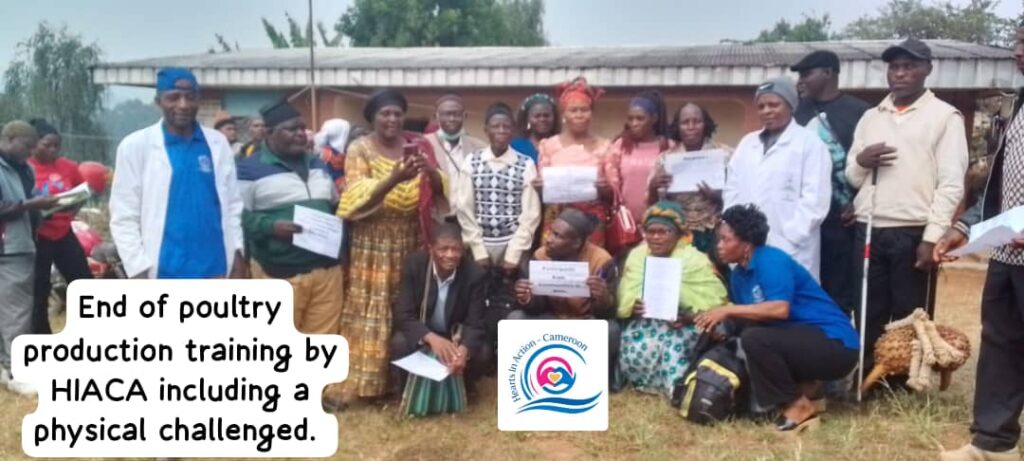
The organization has conducted training sessions in poultry production for 35 participants in Fundong, as well as mushroom cultivation training for 25 people in Belo and 17 in Nkambe. These initiatives are designed to equip participants with practical skills that can generate both food and income.
On April 17, 2026, HIACA organized a seed distribution exercise at its Nkambe office, bringing together representatives from seven Common Initiative Groups (CIGs), representing more than 300 members.
Seeds distributed included huckleberry, okro, red pepper, and yellow pepper—crops selected for their nutritional value and scarcity in local markets. A week earlier, sunflower seeds had also been distributed to 13 CIGs in the area.
“These are crops that are often difficult to obtain,” Francis explained. “By making them available, we are supporting both nutrition and income generation at the household level.”
The organization is also promoting a model where every household maintains at least one vegetable bed year-round, starting with Nkambe as a pilot area.
Beyond distribution, HIACA provides guidance on how to manage and sustain Common Initiative Groups, ensuring that beneficiaries can maximize the impact of the support they receive.
With its activities steadily expanding, HIACA has set an ambitious target of reaching over 3,000 beneficiaries by the end of 2026.
For Francis, the goal is not just growth in numbers, but depth in impact.
“True impact is when communities can stand on their own,” he said. “Our vision is to see people move from dependence to self-reliance.”
In a region where humanitarian needs remain high, organizations like HIACA are increasingly adopting this dual approach—combining immediate relief with long-term empowerment.
For many communities, that shift may prove essential in rebuilding resilience and restoring livelihoods in the years ahead.