


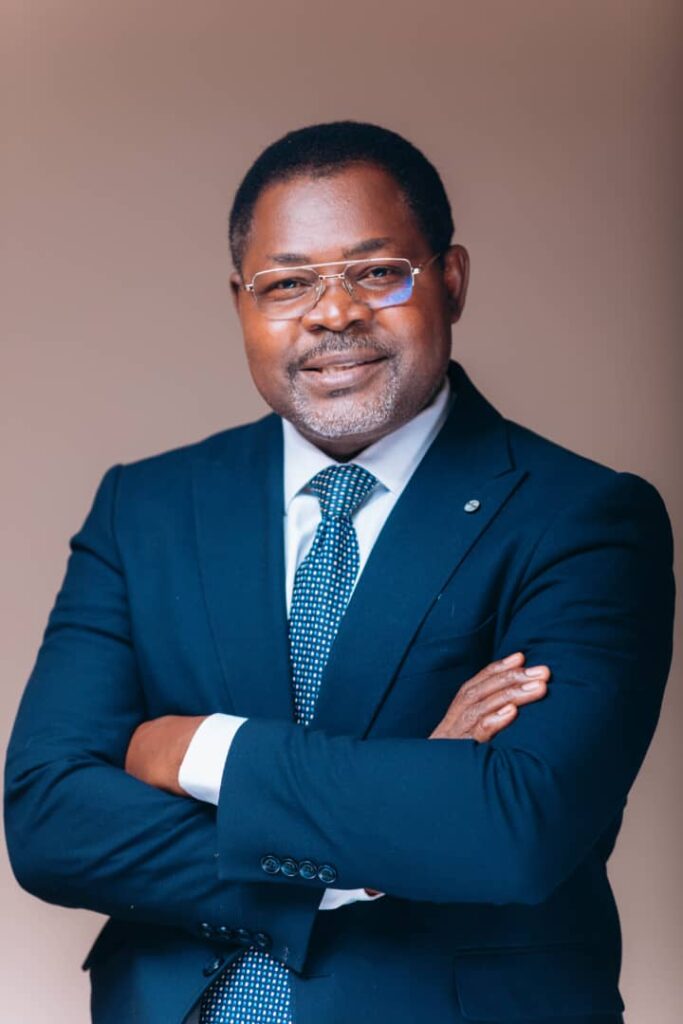
Dr. Tumenta F. Kennedy– Economist & Global Ethics Researcher
We must ask ourselves: at what point does the pursuit of stability become the silent assassin of the truth? The recent gathering in Ebolowa, draped in the noble robes of “responsible journalism,” forces a confrontation with our collective conscience. We are told that the media must manage headlines to “contain” national tensions, yet we fail to question the philosophical rot at the heart of such a demand. If the journalist’s primary duty shifts from reflecting reality to managing it, we are no longer practitioners of a craft; we are architects of a delusion.
By what moral authority do we redefine “unity” as the sanitization of conflict? To suggest that the media is responsible for the “containment” of crises in the North West and South West is a staggering burden that borders on the hubristic. It assumes that by softening a headline, we can heal a wound that bleeds from deep-seated political and historical grievances. But here is the unintended consequence of such intentional “peace-building”: a press that prioritizes harmony over honesty eventually creates a vacuum of credibility. When the public sees a stark divergence between the “togetherness” printed on the page and the “cleavage” experienced in the streets, they do not find peace; they find a reason to stop believing in the institutions meant to protect them.
We are cautioned against “blindly copying Western media,” a rhetorical shield often used to deflect the universal necessity of adversarial accountability. If we discard the “Western” standard of holding power to account as an alien disruption, what are we left with? A submissive, “localized” press that mistakes silence for patriotism. There is a dangerous paradox in being told to hold power to account only in a “responsible” manner. In the lexicon of the ruling elite, “irresponsible” is often just a synonym for “inconvenient.” By accepting these terms, we risk domesticating the watchdog, turning the guardian of the public interest into a lapdog of state-aligned compliance.

Perhaps most chilling is the pivot toward “partnerships” with government ministries as a means of economic survival. We must confront the ethical bankruptcy of this path: a press that relies on the state’s purse for its daily bread cannot, by definition, bite the hand that feeds it. This financial entanglement is not a lifeline; it is a leash. It ensures that the most critical stories—those involving state-sponsored abuses or systemic corruption—will be the first casualties of “economic necessity.”
We must look in the mirror and wonder: where are we going? If we succeed in creating a media landscape that never offends, never provokes, and never challenges the status quo, we will have achieved a graveyard peace. A truly national media does not serve unity by masking the cracks in the foundation; it serves by pointing to them so they might be repaired. To do otherwise is not an act of responsibility—it is a betrayal of the very conscience we claim to be preserving. Are we building a stable nation, or are we simply perfecting the art of looking away while it crumbles?
Reflective Summary for the Reader
”The ultimate irony of intentional ‘peace-building’ through media control is that it often produces the exact opposite of its intent: a public that, finding no truth in their newspapers, seeks it in the chaotic and radicalized fringes of the underground. By trying to save the state, we may be inadvertently destroying the credibility required to sustain one.”
Quotes:
“We must ask: are we building a stable nation, or are we simply perfecting the art of looking away while it crumbles?”
“If the journalist’s primary duty shifts from reflecting reality to managing it, we are no longer practitioners of a craft; we are architects of a delusion.”
We must ask: are we building a nation of informed citizens, or a gallery of spectators watching a scripted peace?
”If the price of peace is the death of the truth, we are not building a nation; we are merely decorating a tomb.”